Friday, 21 April 2023

On the Road, Rusty and Mam Jak

Rusty pauses and a world descends around him... The great forests, the vast plains, each knot and blade of grass moving as he strolls that great land.  The oaks bend to follow. "Damn this grit!" speaking aloud to no-one and all the same. Ah... but what can be done with a single grain of sand? 

"What do I see Mam Jak? The dust of forgotten empires and conquered lands. A tiny shell a grain of stone, here a weapon, an army charging down a rocky slope and the blood of its prisoners. You should perhaps ask what do I want to see in the sand... You and Crinna are both wrong. Have you noticed how hard it is to leave a pattern in the sand? Yet the tiny shell remains. How old is that shell? Its name is lost, but its presence has left a mark. I want to leave a pattern. The desert carries a taint, and that taint casts a shadow, even at midday. I intend to make sure that the shadows' taint is removed.  I am grey. I stand between the shadow and the candle."

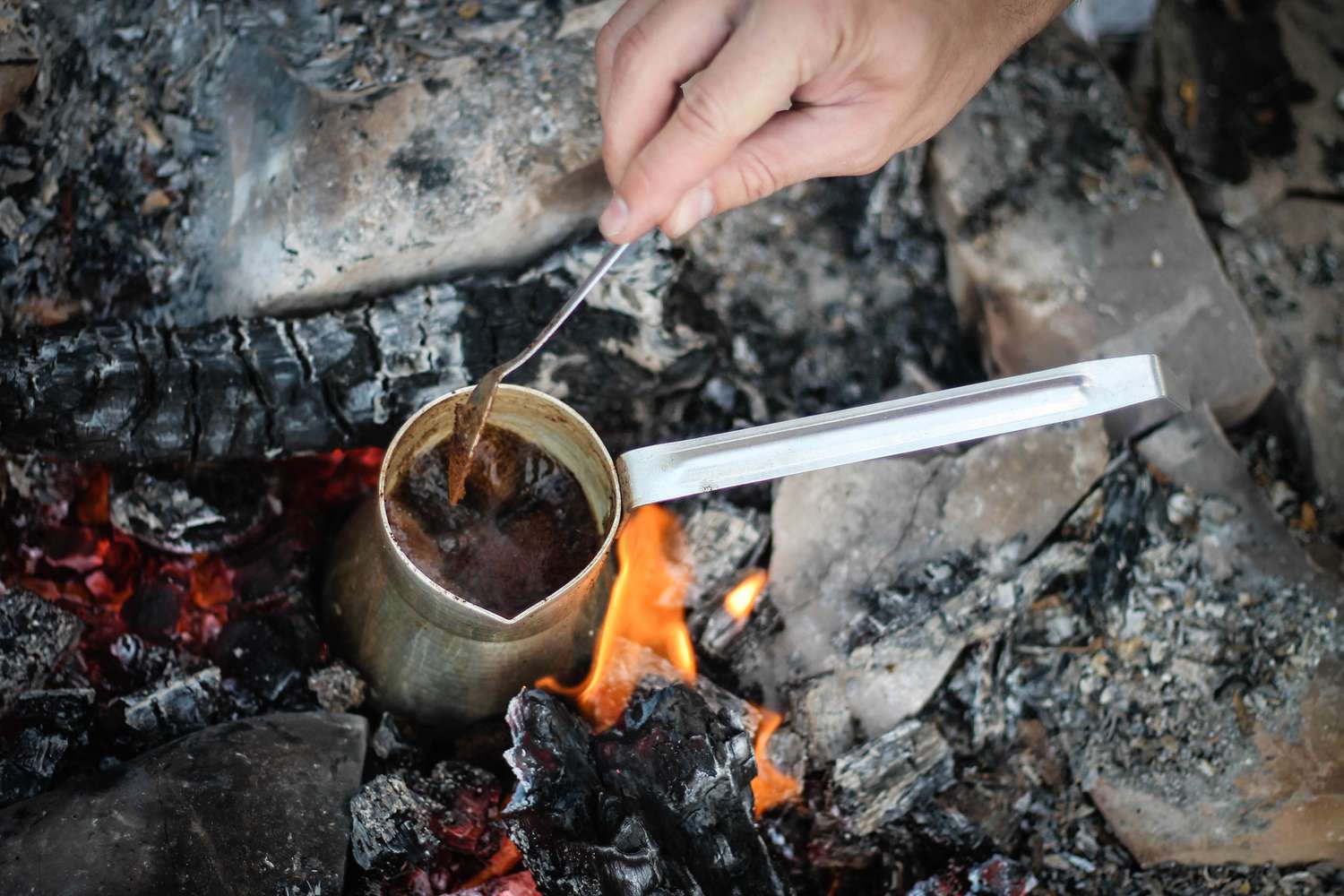
He takes another sip of the dark coffee that has been brewing in the fire.

Different in every way and yet here and now in complete alignment, surefooted on a dark trajectory.


On the Road, Mam Jak and Rusty

If you were to ask Mam Jak she would sit and think a long time.  She would do this in order to form the words in a way that can express what she so clearly and intuitively knows.  

It is a warm evening, but a hint of the winter yet to come is breathing along the valley floor. The fire has burned low, and the embers dance into the clear night sky.

This is what she would say:

"Be not afraid of magic: some are born magic, some achieve magic, and some have magic thrust upon 'em - hehe, which preferably leaves only their
smoking boots!."

"Rusty, we choose which shadow world we wish to see.  For the fighter, there is rock solid reality - they see no shadows because they run into into the light, into battle.  Or because for some, there are no shadows, because there is no light.  Your monk friend is powerful, but Crinna
sees the world as a shadow of her mind.  She seeks to know it better by knowing herself - yet she knows nothing of true enlightenment - she looks in the wrong direction.  

"There is Huitzilopoctli and Quetzalcoatl.

"That is all that matters.  

"We are not in a world of shadows, squinting internally the better to see - we are luminous and the world is alight. We bask in the glow and warmth of the Divine.  It is we who are their
dreams, and we dream ourselves because they will it."  

The embers settle slightly and the fire seems to sigh.

"What shadows will you see Rusty?  What do you see in the sand?" 


Monday, 18 September 2017

This is. The part where I say, "I don't want it"

So I pushed myself to go to Europe, and, unexpectedly, Africa (though that was an easier decision). And on the whole it was good. I had some fun, some truly awesome fun, met great people, saw incredible landscapes and places, had some blues, misbehaved, hung out with some lovely guys, and only occasionally wanted to bolt, felt included and excluded in equal measure, was challenged and challenged back, and I saw some true colours of people that I didn't really expect to see. 

In the end, I've found myself feeling both strong and fragile. Strong because I know and understand my core values a little better. Fragile because, in the words of Jane Austen, "The more I see of the world, the more am I dissatisfied with it; and every day confirms my belief of the inconsistency of all human characters" (Pride and Prejudice, 1813).  

Overall the experiment has worked I think. And a good thing to do in this significant-birthday year. It's interesting to see people pushing their agendas, communicating poorly. Perhaps I'm the same. 

It's time to wrap up this experiment though. I'm an old man and I crave my little comforts - the pillows that don't hurt my neck, smoke free air, clothes I haven't worn every second day for a month and that have been cleaned and dried in the air, soft towels, decent coffee, simple home cooking and an afternoon lazing in front of a good sized tv. And solitude. Quiet, blissful solitude.  
Obviously I have a list of things to do on my return. Some mundane, others a set of self improvement resolutions. Some things can only be seen with perspective. And I don't claim clarity in that regard, but the time out has been useful. Perhaps the only real challenge in life is to know yourself. Honestly. Properly. Brutally. Forgivingly. 

I agree with Shrek: ogres are like onions - they have layers. I feel that, while I'm still moving through layers, I might have moved this year into a different onion. It's different to how I've felt in the past. Time will tell. We all have our baggage. I can tell that I've discarded some through this process. Now it's time to repack what baggage remains - just a backpack, with the essentials. 

So thank you to everyone that has helped me on this journey. Yes, and to everyone less than helpful too. Everyone has their part to play. 

It's been good, though I feel bittersweet about it. I need my own space and my own company. Time to hang up the traveling bag and the universal power adapter for a while. Time to go home. 

With thanks to Ariana Grande

Sunday, 17 September 2017

The Chamber of Missing Things

It's been dark here. Not for any terrible reason. Fearful maybe. But mostly just forgotten. Overgrown with weeds and sinews. 

Now I've opened the curtains. Rediscovered the place, like a ruined abbey. Or a disused sanctuary. It once felt safe and sound there, even though it never was - quite the opposite. 

As I look around its soft grey stone, is has a calming coolness. There is moss there, bright green, and soft leaf litter around the stones, like a glade in a deep forest. It isn't dank, or even wet. If it had been the site of a massacre there is no trace of it now. Except perhaps in the lushness of the ferns and greenery. 

In some ways it is like a engine bay of a giant machine, but one with the engine long since removed. Only the stone fixing mounts and brackets provide the hint of any such former function. And perhaps the compact shape that could forensically reveal its former occupant, like a frozen waistcoat, if you scraped away the moss and the soft forest floor. Confusingly the space is also small, and the scale is hard to pin down. It is both a jewel box, and the hall of a disused power station. 

It had been a place of memory and gravity. And deep sadness. Now that the boarding up has slipped away, and the curtains pulled aside and the light floods in though it feels peaceful. It feels lighter and still inside. A breeze flows through and you can see daylight across the opening. There is impression of hope in the negative space mapped out its former occupant. But that brings fear too.

Somewhere on the other side of the world a figure with a backpack still moves. Silently. Secretly. Not hiding. But not being found either. Exactly where he needs to be. Moving his cargo of playing cards, bottle caps and the tiny coins of foreign currencies. We only catch glimpses on grainy video, or unreliable reports of his whereabouts. But we can sense he is alive. And well. Secret. Safe. And free. 

I think he's holed up in some quiet pub, amongst strangers and new friends. I think he's having a good time. But the truth is that's all from one picture of him, in a dark overcoat and a wide brimmed double pointed hat, stooping slightly to enter the door of an old tavern, and turning back to look over his shoulder at the elevated camera. What happens after that is anybody's guess. 

The curator knows that it is time to have opened the space. Curiously, perhaps, because he didn't know the space had been there at all. What he also hadn't known was how heavy it had been. But in that first sigh that came with its the opening, like the cracking open of an old tomb,  perhaps a small dark presence, or echo, had been allowed to leave. Now it's sunny in there and airy. And lighter. 

The curator has a nostalgic idea that the engine may return to the sanctuary. And this could happen. But it is far from certain. And not necessary. There is a new space here. Despite its age. 

There is an illusion that meeting new people provides. A choice paradox. But it is a mistake to imagine that quests are so easily resolved. It's a trap. And the most important thing to realise is that there is no quest. 

So I will carry this mossy grey chamber with me for a time. 

Saturday, 16 September 2017

Marriage Equality Sans Marriage

Is it just me? 

I'm so happy that I am not home for the horrific charade that is the marriage equality debate in Australia. 


Obviously I'm voting yes. Take out the words marriage equality from the equation and replace then with 'slavery' or 'women's rights' and all of the no arguments are the same. It's offensive really. 

What's more important is for my country to send the real and symbolic message that to be gay in Australia is not to be a second class citizen - that at a fundamental legal and social level it's ok. 
But don't hold your breath. Even if it's a resounding yes the Liberals, and the disgusting coward Fizza at its helm (complete with all his puppet strings) won't leap to change the law. It will stall and flounder until they lose government. Then Labor has pledged to pass the law within 100 days, but let's face it, their track record is nearly as disgusting.  

The bitterest message though in all of this for me is that I won't be marrying. All the single people my age, or age appropriate to me, have either given up, are crazy, or both. Not a productive field. I place myself in the first or maybe the third camp there. 

So every time I hear anything about marriage equality know that it is a double stab - first because it's clear my country thinks I'm second class, and a second because irrespective of any law, it's not going to change for me anyway. I guess I had my turn years ago. 

"And that is why my eyes are closed,
It's just as well for all I've seen
And so it goes, and so it goes, 
And you're the only one who knows"*

Perhaps that's the best way to cast a - well I hate to call it a vote because it isn't, but you know what I mean - vote; not for yourself, but for the benefit of future generations. 

Yes. It is just me. 

* Billy Joel, And So It Goes, Stormfront, 1989

Friday, 10 March 2017

Gesta non Verba

My first photographic exhibition was in 2015, and my first exhibition of paintings and sketches was in 2016. Despite this, I blush when people suggest I am an artist. It's not my day job, and though I think of it as more than a hobby it certainly doesn't pay any bills. A colleague of mine, a recent masters graduate in fine arts, told me one of the most important things he learned in his long years of study. One of the senior lecturers, in the very first lesson, said, "you may have a lot of good ideas for paintings, and you may spend some considerable time developing those ideas in your head.  But let me assure you, people who produce works of art in their heads, even astonishingly brilliant works are called dreamers: People who paint are called painters." He was in great company. The great Pablo Picasso would have agreed, saying, "What one does is what counts and not what one had the intention of doing."

When my last relationship ended, the break up hit me hard. One of my friends asked me to picture a timeline of all the things we had done together, everything of value, all that we had done, talked about doing, our dreams and our expectations. Lay it out taxonomically, pinned down like butterflies on tickertape. Then to take an axe and cut that timeline, severing it at the point of the breakup. Everything on the left of the cut, he said, are the things that actually happened. All the things on the right of the cut, well, they didn't actually happen: they were just what you hoped would happen – your dreams, expectations and intentions. Think about each side of the timeline.

Of course when I began to look as he had suggested, and pictured the timeline as a dark ribbon, severed and each side now gently flapping about in the breeze, I realised how much talk and expectation there had been, and how little real action. And in my grief the most curious realisation came upon me – that the things I valued most and missed most about our relationship had been the things that were yet to be, the things for which I had hoped and worked, the expectations – these things were imaginary. Why should I be so harmed, and ache so much, for something that was only in my head? Perhaps I should not have been so surprised. "All pleasures are in the last analysis imaginary, and whoever has the best imagination enjoys the most pleasure. Only unreality gives value and is actually the only reality." So writes the Nineteenth Century German novelist, Theodor Fontane in Trials and Tribulations.

But it got me thinking about actions verses intentions. What if I set out to do something truly noble, outstandingly admirable, but it fails, and even harms.  Do my intentions give me an alibi, a degree of nobility? Do they exonerate me from the moral culpability of what I do? Conversely, do bad intentions corrupt good behaviour? What if intend to harm someone, or provide only begrudging, lacklustre assistance, only to have it backfire and elevate them instead – what then of my intentions?


I've come to the realisation that I am, or at least truly aspire to be a man of action. Like Alexander, Caesar, hell, like Batman, to be not what I think, neither what I hide, but what I do. And like any Hegelean hero, whose intentions don’t matter one bit, who I really am, what I really stand for, and what I really believe must demonstrated by my actions. Inserting some intention after the fact is nothing more than an elaborate form of self-deception. Funnily enough, when I thought back, Gesta non Verba was my high school motto: actions not words.  Perhaps it sunk in further than I had noticed.


I understand now why Batman is a loner. Or Logan, the Wolverine. Most people say they want things done, but mostly they want to talk it rather than do it. People say they want sensitive new age men, but when your car has crashed and its on fire, do you really want the man who runs up to the wreckage to say how much he understands and even empathises with your pain, or to rip the door off the car and carry you to safety in his bugling hairy arms without necessarily even speaking. In the words of Shrek, "Hey! I'm no one's messenger boy, alright? I'm a delivery boy." Careful what you ask for.

So if I'm ever in a position to start measuring out tickertape ribbon again, axe sheathed for now, by all means say I love you. Say it with passion and conviction. Say it because you can't hold it in any more. And say it because the words have formed of their own accord as a force of nature. But it's no get-out-of-jail-free card. I don't want you to say I love you – I want you to do I love you. I want it self evidently and overwhelmingly clear from your actions and behaviours. Keep your Hallmark moments. It's like most marketing I hear – If you feel you have to say it to make it true, then it probably isn't really there at all. Gesta non verba.

Monday, 27 February 2017

L is for Elsa or What Disney Princess Are You?

It's my 50th birthday today. Fifty of course is L in Roman numerals (I for one love Roman numerals) but I think perhaps it's not the right symbol to have tattooed anywhere prominent. A friend told me today that I should be looking forward to my 50s as a period in which "everything is just more in control and focus". Perhaps he's right. I feel like I've spent a long time trying to let go of controlling things, but if there is anything the universe has told me this last few months it's that if I want anything to be done, then despite whatever contracts or agreements are in place, no matter if it's the assistance of a best friend or just help from a paid consultant, if I really want it to happen, then the only way it will with any reliability is if I do it myself. I suppose that's the opposite of letting it go.


It got me thinking about whether I've been picking the wrong archetypes this last half century. And so, like a sick Facebook quiz that just wants to rape your email and spam your contacts, I began to wonder what Disney princess I was. 

Now I've been amongst the common people on more than one occasion, and more than once I've once had to ask myself if it was acceptable to be that turned-on by a young middle eastern man, barefoot, brown skinned, semi-topless and pantalooned... but I'm no Princess Jasmine. Certainly I've dated a few beasts in my time, and despite the love I felt for them they never seemed to take human form... but I'm no Belle. Cross-dressing and joining the military have never been on my bucket list, which crossed off Mulan. And while I've often felt like a fish out of water, I'm no Ariel.

Lately it's occurred to me that I'm Elsa, Princess of Arendelle, queen of Frozen. Not just because she's the newest, and by most accounts the most popular princess, but because at the end of the movie she's still single, and she's cold. Loosely based on the "The Snow Queen", a fairytale by Hans Christian Andersen, Frozen's Elsa character is actually a composite of two characters from the original story:  Kai, Anna's brother who is cursed with negativity after his heart is pierced with a shard of glass from an enchanted mirror, and the Snow Queen, fair and beautiful, but made of ice. 

More than that, though, as an overarching theme Frozen preaches the importance of embracing your true nature. But it's not without cost. At the end of the film Elsa doesn't get the guy... it's her sister Anna that does, and after a significant wrong turn. And he's no Prince, he's a cowpoke, well, reindeer-poke. It's a nice twist really, rustic and real. In fact, the whole story is a modern, subtle and subversive commentary on true love and relationships: Olaf is no Prince Charming. Prince Charming is no Prince Charming. True love isn't romantic love. The hero doesn't get the girl, or in this case the guy. And the world is full of trolls. Kids, it's a dark and brutal message about the price you might have to pay for being yourself and what you can expect along the way. 

Oh well. Let the storm rage on, the cold never bothered me anyway. What Disney princess are you?

Monday, 13 February 2017

Wabi-sabi

Who's your favourite sportsman? Mine is Eldrick Tont "Tiger" Woods. Now I've never played a full 18 holes of golf. I played nine once, and it was a mysterious and highly unpredictable game (even just in terms of knowing which direction the ball might head after being struck). I tend to agree with Harry Leon Wilson who wrote in his 1905 novel The Boss of Little Arcady "this new game of golf that the summer folks play seems to have too much walking for a good game and just enough game to spoil a good walk".

Following an outstanding amateur golf career, Tiger turned professional at age 20 in late summer 1996. By April 1997 he had already won his first major, and reached the number one position in the world rankings only two short months later. Through the 2000s, Tiger was the dominant force in golf, spending over 500 almost unassailable weeks from August 1999 to October 2010 as World Number One. Good natured, clean living and simply apple-pie. Perfection in plaid pants. I don't like him that much for his golf, impressive as it was. I like him for something far more impressive: his humanness.

Tiger's monumental fall from grace after the airing of his almost innumerable alleged infidelities was for me the defining moment of his career.  The sponsors dropped away like wounded birds and suddenly he was no longer outstanding in the field but just out standing in the field. No mere sportsman now, no freak with a big stick and an uncanny ability to hole his dimpled balls, this was a human through and through: flawed, and apparently subject to all the same vagaries and temptations as are we all. Suddenly he was real. It was his brokenness, his flaws that made him so appealing, accessible, real. Before, he had seemed, well, too shiny, too good, fake.

You could probably say the same about President Clinton, after he "did not have sexual relations with that woman". Slick Willie, was always my preferred moniker for him, so to speak, although the Comeback Kid has a certain je n'est sais quoi in the circumstances. Like Tiger, who rose to number one again in 2013, Clinton's polls actually firmed up after his fall from grace. Why is that? How? Weren't they both broken?

Wabi-sabi represents a Japanese aesthetic view centred on the acceptance of transience and imperfection. According to author Richard Powell, the Japanese term wabi-sabi "nurtures all that is authentic by acknowledging three simple realities: nothing lasts, nothing is finished, and nothing is perfect." Buddhist author Taro Gold describes wabi-sabi as "the wisdom and beauty of imperfection." Westerners may be most familiar with its application in kintsugi, the Japanese art of repairing broken pottery with lacquer mixed with powdered gold or silver. Also known as kintsukuroi, it treats breakage and repair as part of the history of an object, understanding it is something to be celebrated rather than disguised. Not only is there no attempt to hide the damage, the repair itself is literally illuminated. It is deeply beautiful (though Greek newlyweds may have a different view, if only for practical reasons).


Perhaps wabi-sabi is a concept for our times, as we roll our role models and elect leaden leaders. The first item ever sold on eBay, now a multi-billion-dollar e-commerce business, was a broken laser pointer. Even though the seller informed the buyer the item didn't work, it nevertheless sold for $14.83. I wonder if the buyer had it repaired in gold laquer.

Can kintsugi be practised in the realm of human relationships? I dare say Tiger and the Comeback Kid applied liberal amounts of gold and precious metals to theirs as the ground fell away from them (though I imagine these were lacking in laquer). Can you repair a broken heart with laquer and gold dust?

In Margaret Mitchell's novel Gone with the Wind, Rhett Butler delivers the following speech to Scarlett O'Hara: "I was never one to patiently pick up broken fragments and glue them together again and tell myself that the mended whole was as good as new. What is broken is broken - and I'd rather remember it as it was at its best than mend it and see the broken places as long as I lived." Lately though I've certainly found myself embracing a certain serene melancholy and gentle acceptance of brokenness. My own, that of lovers past and of those closest to me. I sometimes picture those fault lines as the richest seams in our interactions. Sometimes the right state of things is broken. At their best. Authentic. Real. Human.

Thursday, 26 January 2017

Love and Gravity: The Event Horizon

Recently I made some bad investments in friends. I don’t mean I leant them money and never saw it again. I invested something far more important than money. I invested time.

Three moved back to destinations abroad (thanks for nothing Australian immigration). And whilst we’re still in touch, it’s not the same. But two others simply vanished right in front of me. What had happened to them?

The theory of general relativity, developed by Albert Einstein in the early 20th Century predicts that a sufficiently compact mass can deform space-time to form a black hole. It is a region of space having a gravitational field so intense that no matter or radiation can escape. I propose that what I have discovered is that natural forces (dare I even say the "L" word) can cause two individuals to be similarly compacted to the point that the only explanation is that they too have formed a black hole. 

We had all noticed that they seemed to be spending more time together. In the last few days we had seen them there was an obvious increase in their affection for each other, and a general dreaminess to their dispositions. As I reflect on it now, their attraction for each other escalated beyond all reasonable measure until it was like a kind of gravity. You’ve all seen it before. The couple had become inseparable: A singularity. That much was understandable, but there was more to come. 

Requests to catch up, invitations to brunches or parties sat unreplied to, lost in a background of self absorption. It was as though the messages had shifted to longer, unreadable parts of the electromagnetic spectrum. Maybe their field of view had become more and more compressed until it was a smaller and smaller point in the space behind them, and they were unable to see us. Meanwhile in our field of view, outside the singularity, they had become distorted into blackness. Their attraction had grown to become so intense that nothing escaped; no words, no messages, not even light. The space around them had become dark to outsiders. It had formed an event horizon. A singularity protected by an event horizon. A black hole for two.

I think the term event horizon is the most poetic term in physics. Tantalising and poignant, the event horizon is the boundary of the region from which no escape is possible. Why? It marks the point at which the escape velocity of the black hole is equal to the speed of light. On the surface of the Earth, the escape velocity is about 11.2 km/s, approximately 33 times the speed of sound. Fire up a rocket to that magical speed and you’re off into space. On the moon, with a much smaller mass the escape velocity is a tiny 2.38km/s, not much more than the speed of a bullet out of a rifle. But the distortion of space-time around a black hole is so great that the escape velocity is the universe’s absolute speed limit, the speed of light, a ruthlessly unattainable almost 300,000 kilometres per second enforced by the laws of physics. 

At one magical luminous point on the very surface of the event horizon, called the photon sphere, light could reflect off the back of your head, orbit the singularity and arrive directly at your eyes nanoseconds later, allowing you to see the back of your own head in real time. This possibly explains the last incoherent fragments of contact that were had with the couple. Once they had crossed this, there was no going back. They had gone.

You know what I'm talking about. We've all lost friends to this "love" business. I suppose we shouldn’t be sad. For the couple, safely inside the event horizon, nothing else matters. Everything would seem normal to them, or so the theory goes. Well, we don’t really know what happens at the singularity. I certainly don’t. And at my ripe old age I’m certainly not expecting to find out. Sure I’ve had my fair share of gravitational lensing, but I ain’t holding my breath.

Perhaps they’re tightly held, compressed in a deep embrace. With all that light raining in on them from the photon sphere we could even call it enlightenment.

Friday, 13 January 2017

Bootstraps

This morning I gave myself a hug.  It was strangely comforting. Another in the long list of things that I do for myself.  Not through choice, but through necessity. I call this pulling myself up by the bootstraps. An absurdly impossible self-starting process. Putting on my face and my façade, gathering some semblance of impetus. It’s a routine. I often actually even picture the boots and lifting the straps, a pair at a time just to stand, cartoonesque yoga, solemn and foolish.  Because underneath there is now the overwhelming realisation that this is it.  It’s not bad, far from it. But it’s so much less than I had hoped for.

In one of those weird synchronicities, bootstrapping in computing is also a self starting process that supposedly proceeds without external input. But is has a very different etymology. The earliest computers were colossal empty engines of valves and wires until their operating systems were loaded. The British computers used paper cards punched with ones and zeroes to load the core software but the American ones used paper ribbons like ticker tape. Their operators called them bootstraps, because they were like the laces of giant shoes. So one ‘bootstrapped’ an American computer to get it started. And when it crashed, it’s where the term ‘rebooting’ comes from.

It’s January, rebooting the year, and of course there’s a list of New Year resolutions. I’m ticking them off, one by one.  Back at the gym – check (personal trainer thank you very much). Repair the outdoor furniture – check. Blogging again – check. But amidst these superficial restarts are a much darker, confrontingly honest set of resolutions that are finally being acted on. At long last, and arguably 20 years to late (though better than never), I am setting up for my independent financial security. Investing, consolidating superannuation, acquiring relevant insurances. It’s been a long time coming. But it’s a very real material step in a realisation that there is no prince arriving on his white charger to save me. I am that prince.

"Whether I shall turn out to be the hero of my own life, or whether that station will be held by anybody else, these pages must show." So begins Charles Dickens' novel David Copperfield. It’s too early to determine if my role is hero, or something less, and I’m prepared to be optimistic about that. But it’s very clear that almost half a century on, and after ten years of, shall we say, unhelpful casting, the role remains steadfastly unfilled.

I sense that the ones and zeroes are moving on the tape that contains my operating system. So it’s just me. In fact it probably always has been just me. And I guess that, even though it seems a bit less bright from time to time, that’s alright. Thank you Morpheus – apparently I have chosen the red pill. Bear with me while the operating system adjusts – I’m a whole lot more complicated than mere bootlaces.

Saturday, 10 October 2015

Lost things


I have an image in my mind that is my home.  There is a concrete frame, columns and beams, and the sense of wide floors above. The concrete feels old and it’s badly weathered, flaking in parts, exposing the rusting steelwork behind.  There are no walls, and no interior finishes though there is a sense they once might have been here. Where there once was a floor, there is now a choppy sea, rolling around under the frame, splashing the columns. Some time ago, long ago, there might have been a wall and a drawbridge. But the sea has long since removed any evidence of these.  

The sound of the wind and the waves is strong, and there is a distinct taste of salt in the air – mostly sea salt but tinged with other flavours like sweat and rust and age. Some sort of dark maroon igneous rock sits at the side of the frame, barnacle encrusted and deeply pitted, anchoring it. The frame is quite sturdy despite its clear decrepitude, and in no danger of collapse. It appears to have been ransacked, pillaged.  But the reality is this is place was abandoned well before it was looted. 

I’m not sure why but I can’t see above the frame. There is partial ceiling, again bare concrete, and there are holes in it, quite large holes with twisted, rusting reinforcing bars poking down here and there below the level of the frame.  Even though I cannot see what is above, somehow I know it is in a similar state of ruin.  I think there’s only one or maybe two floors above.  They too have no walls, but there’s a hint of remnant furnishings. It’s breezy up there and there are torn, sun bleached curtains flapping in the breeze around a pile of cushions or maybe bedding. Maybe it’s a throne from when this felt more like a castle. But it’s more Arabian than that – summery warm colours and open like a sultan’s palace vaguely reminiscent of the Red Fort in Agra. A ransacked sultan’s palace. But it’s too hard to make out.  I know it used to be quite richly appointed when that sort of thing seemed to matter. I’d like to think there was an observatory on the roof, but that would be mere conjecture. 

Off to the distance there’s a beach somewhere, around the headlands of similarly formed igneous cliffs. But it’s deserted.  I’ve never seen anyone else there, even though I know exactly who ransacked the place. Well, the first few… starting with me. After that, who can say.

I feel safe here.  There’s nothing left to destroy.  There is no value in the concrete – help yourself. The wind blows through and the sea washes in, but that’s how it is. How it should be.  Gently scouring the surfaces. No one lives here now.

Somewhere, far away is a man with a hooded robe and a backpack.  His face is shrouded. I see him occasionally looking back, but I don’t know exactly what he looks like. I cannot see his face but he is often grinning. If he were a tarot card he would be the Hierophant or perhaps the Hanged Man. He has some of my home with him as well, in the backpack. The valuable portable things that also say home. Not gold and gems, but things that have a special resonance. Things that marked and witnessed particular events. I can’t tell you exactly what they are – some are metal, some fabric, weird trinkets like bottlecaps, ticket stubs and corners of playing cards. 

I don’t know where he is taking them. Perhaps he is keeping them safe, constantly on the move, away from the ransackers and pirates.  Perhaps he has taken them for himself. Maybe he is condemned, exiled. Or perhaps he is free. Maybe these are the items that he will bring back at some future time, when the frame is renewed and the spalling concrete patched and repaired, the sea calmed and drained from the foundations. Or perhaps he and these trinkets need to exist elsewhere. Like fixed moments in time, they need to happen, and they need to exist. Eventually they will decay and corrode. But they can neither be destroyed or returned.  Perhaps they will recombine and witness new moments far into the future.

It brings me great calm that he has these things. And that I do not know where he is. I sometimes wonder if that is me under the hooded robe, hiding in plain sight somewhere. If that is me, then who am I? And why do I keep remembering this frame in the ocean so far away.

MADness

It’s a brave man that goes digging around in gay relationships.  I don’t mean anything more than a couple of gentle questions – you wont need a shovel and a pick. After my umpteenth romantic failure I made it a bit of a habit out of it. Like Danté, I had found myself lost and unable to find the “straight way” (diritta via) to salvation (yes, technically, also translatable as "right way" but you see my point). Perhaps I was searching for my own answers. Perhaps I was hoping for a role model - a template I could roll out at some future time should the opportunity ever catch me off guard again. No sense reinventing the wheel – surely some of the men living in Sydney must have found at least some of the answers. Let me tell you it is a line of inquiry that could just as easily have carried above its gate the same inscription Danté found. 

Try it if you dare. Be kind. Life, even easy life, is hard. Ask gentle, reasonable questions about why they stay together, how often are they intimate, are they happy. Are they like affordable flat-pack furniture: underneath the beautiful thin veneer of mahogany all offcuts, chipboard and glue - sturdy so long as it all stays dry? Or are they like a Balinese villa – completely open to catch the trade breezes?  Can you ever really tell what’s going on inside a relationship unless you are in it? Even if you are in it? Every relationship it seems has its own individual arrangements and fine print. Often it seems each party has a different contract, a different set of rules. Or perhaps they’ve just never read the rules, just agreed on face value, and let finer points be most oft observed in the breach: Special clauses written on the go, subtle changes to wordings, never spoken about, but cajoled into existence. Ask them. Inquire.

I can count on one hand the number of gay relationships I know that are based on any kind of demonstrable honesty, trust, or integrity. It seems to me that the rest of them are an art form of coercion, of intimidation and subterfuge. You see them out at brunch, smiling and shaking hands like Reagan and Brezhnev, posing for the cameras. But later they’re at separate sides of the sofa blocking each other on Scruff. Perhaps there was genuine love and attraction at some point, early on. Perhaps deep down they still remember it. But now it’s a state of political hostility characterised by implied threats, plausible absences and other measures just short of open warfare. Then they return home to their designer apartments with the mortgage payment neither could individually afford, and the 1000 count Egyptian cotton bed linen that is a more loving caress than either of them still have for each other. 

These are not the model relationships the counsellors and the self-help books tell us about.  These are the antithesis: Relationships built on the complete absence of trust. A kind of détente. How could this be? Is this even possible? It is a familiar scenario to anyone who like me grew up in the 1980s.  It is called a cold war.

Perhaps the pinnacle of cold war strategy is the doctrine of mutually assured destruction - MAD. It is based on the theory of deterrence where the threat of using strong weapons against the enemy prevents the enemy's use of those same weapons. In its ultimate expression, the full-scale use of high-yield weapons of mass destruction by two or more opposing sides would cause the complete annihilation of both the attacker and the defender – annihilating humanity. Is the cold war alive and well, and living at a domestic scale in apartments throughout Darlinghurst, Potts Point and Waterloo? The fear of being left driving acceptance of almost any behaviour, and the thought of leaving always just below the surface and justifying almost any kind of behaviour. Actually leaving though – this is a horror far too uncomfortable to contemplate, far too destructive for either part – that would be madness! So it is a power always held in reserve. 

Despite concern over the hair trigger that the United States or the Soviet Union might possess, and that was a very real concern in the 1980s, when it came down to it, neither side went through with launching their missiles. This was proven on a few particularly gut-wrenching occasions like the Cuban missile crisis of October 1962. I suspect it’s the same for gay men and their infidelities, betrayals and designer apartment lifestyles.
MAD, however, didn’t exactly create an atmosphere in which Soviet premiers and American presidents were great companions. The nations had very little trust in each other – with good reason. Each side was steadily building its arsenal to remain an equal party in the MAD doctrine. They were like two gunslinging foes, adrift alone in a lifeboat, each armed and unwilling to sleep. Sound familiar?

Mutually Assured Destruction. And yet, it was arguably the greatest period of stability and prosperity the world has ever known. I can’t help but think that this may the best I have to look forward to. Stability, prosperity and détente. "Lasciate ogne speranza, voi ch'intrate".

Sunday, 31 May 2015

Twice as bright, half as long

I'm sure you've all heard of speed dating. I’m not sure it necessarily helps you find Prince Charming, but it’s fast and efficient. Like interviewing a few hundred frogs in one evening to see if there’s any you’d like to kiss, without all that risk of warts. Or is it?

Have we gone far enough? Could we grow the notion of speed dating, but stick to the timing.  In our world of 30 second sound bites… wait – scratch that – 5 second sound bites (sorry I got bored)… apps screaming for attention, red badges on the screen, reality TV and the catastrophisation of everything, who has time for a second date on a second evening? It’s laughable! What about speed relationships?

By all means start with eyes-across-a-crowded-dance-floor, but from there, why not pack a whole relationship into just one evening. Kissing under the mirror ball, proposal in the queue for the bar, consummate it in the toilets, dance for a magic hour or two until the attraction starts to flag, have an affair (also under the mirrorball while he has one in the dark corner next to the cloakroom, which he will later deny even though the evidence is all over Instagram), accuse each other of cheating, make up, both kiss someone else again, have the stand up argument and then get divorced before you’ve even left the club... with on-the-spot counselling provided by Rihanna and Beyoncé (or if you’re at Palms, Whitney and Michael). You don’t even have to delete your Grindr and Scruff profiles or argue about who's on which side of the bed. Since you haven’t had time to add them as a Facebook friend there’s no awkward issues about unfriending them later that morning. So much more efficient.

You think I’m joking? I wish. Actually my record for this kind of a relationship is just three hours. It makes the whole experience so much more intense and without inconvenient things like children and property to divide when it inevitably goes south. Some 'speed exes' may still feel the need to glare at you if your paths cross again, even when it was him that broke it off, but this normally passes in a week or so.“The light that burns twice as bright burns half as long”, says Dr Eldon Tyrell in the film Blade Runner. And you can burn “so very brightly” in just three hours. 


Yesterday I cooked Osso Bucco, an Italian stew of beef shins and vegetables. Three hours into it and the beef was looking, well, tough. It had more in common with shoe leather than with something edible let alone tasty. But I held the line. The simmer at the tiniest of bubblings. Another five hours staying the course. An outrageous, old-fashioned, act of faith. And then something magic happened. Everything relaxed. Everything melted together. And it was good. Better than good. It was delicious.

By all means ask me out on a speed relationship. But just remember you can't divorce me until you've actually married me. And don’t even think about dating me unless you’ve known me for six months. If you have no idea who I am, what makes you think you’d want to have a relationship with me? First things first. Seriously!

Sunday, 17 May 2015

Swedish Crapture

Have you ever heard of Norrmalmstorgssyndromet. No? I’m not surprised. Coined by the criminologist and psychiatrist Nils Bejerot, it is named after the robbery of Kreditbanken at Norrmalmstorg, Sweden August 1973 in which several bank employees were held hostage for four days in a bank vault while their captors negotiated with police. But you might know it by its anglicised name: Stockholm Syndrome.

Stockholm syndrome is a psychological phenomenon in which hostages express empathy, sympathy and positive feelings toward their captors, sometimes to the point of defending and identifying with them. These feelings are generally considered irrational in light of the danger or risk endured by the victims, who essentially mistake a lack of abuse from their captors for an act of kindness.

During the Norrmalmstorg standoff, the victims became emotionally attached to their captors, rejected assistance from government officials at one point, and even defended their captors after they were freed from their six-day ordeal.

Have you ever been held against your will? Perhaps with a mortgage, or waiting for that rental agreement to end. Was it on an overseas holiday that had a lot more baggage than there seemed to be on the airport carousel and in the overhead locker. Maybe it was the long, long wait for permanent residency. Maybe it was just the long wait for him to become emotionally available.


I wonder if Norrmalmstorgssyndromet explains all longer-term human relationships. There’s the initial honeymoon, the swoon, head over heels. And then, before you know it, there you are defending the indefensible, supporting the outrageous. Even craving it. Now, heels over head, the slightest kindness and you go to pieces.

Why do people stay together when they so often behave so badly to each other. Also called capture-bonding, Stockholm syndrome does not necessarily require a hostage scenario: It can be seen as a form of traumatic bonding, which describes strong emotional ties that develop between two persons where one person intermittently harasses, mistreats, or intimidates the other.

When you think about it, it’s not a very big change between rapture and capture. Six days was it? I guess I’ll let you know if I ever find myself in such a long-term relationship.


Wednesday, 13 May 2015

The Blessing of the Werewolf

Do you remember the scene in... well I was going to suggest a specific werewolf movie, but it's all of them really.  The werewolf, back in human form, waking up naked in the cold morning light. Unsure exactly where he is. Maybe the taste of last night sill in his mouth. Possibly a few scratches or bite marks. Torn clothing discarded. The quintessential version for me is from American Werewolf in London, waking up in the cage at the London zoo, but there are as many different versions as there are full moons. I suspect you've all done it. 

At some point, possibly after a beautifully prepared meal, some fine wines and an evening of stimulating conversation, possibly just seconds after he walks in the room, there it is. The unmistakable increase in body heat, the rising of blood. As though the full moon had suddenly uncloaked itself then and there in the room with you, its gravity demanding your swoon and fall. And there it is. The animal. The werewolf. 

Who can say what happened next. There are vague memories of unclear shapes, shredded clothing, the smell of sweat and other fluids, echoes of growls and animalistic gruntings. The flush of all consuming life still coursing through your body. Heart still beating fast, lungs still heaving. Then eyes rolling slowly back into the now, and there you are, in birds-eye view at first, out of body but returning. Naked, clothes strewn who-knows-where. The ersatz crime scene. Perhaps you are at the London Zoo, perhaps the kitchen floor or the dining room table. And so is he. Do you even recognise him? Do you even recognise yourself?


The moon has set. The present washes back in. Clothes are found, socks pulled on, ties and belts tightened. Plausible deniability. Perhaps there is a cheeky grin, perhaps a shudder. Maybe even a phone number. The door closes behind him, and still you are left wondering what strange power had possessed you. Safe now, for a moment, from the curse. And you laugh. Partly because the whole act is so ridiculous; partly from the divine release of tension; and partly to mask the fear of knowing that you will transform again, in the blink of an eye, the second the opportunity arises.

Clinical lycanthropy is a rare psychiatric syndrome. Its name is connected to the mythical condition of lycanthropy, a supernatural affliction in which humans are said to physically shapeshift into wolves. Affected individuals report a delusional belief that they are in the process of transforming into an animal or have already transformed into an animal. It has been linked with the altered states of mind that accompany psychosis with the transformation only seeming to happen in the mind and behaviour of the affected person. And maybe the mind of their partner/trade as well. I wonder is it really that rare, or is it actually very widespread but very short lived?

Do straight men feel the same. Maybe they have had it bred out of them, like pedigree dogs that howl at the moon without knowing why. Is it a blessing or a curse? Could you even tell the difference?

Wednesday, 28 January 2015

The Shadows of Unseen Things

If you've seen the movie Interstellar (2014), and I recommend that you do, you may have heard the word tesseract used to describe the manifestation of time as a physical dimension and seen it's magnificent portrayal inside the black hole Gargantua. The Marvel version is a bit more cryptic - a source of great power and key to travelling to and from Asgard in the Avengers movie (ah, Loki, when will you learn: Hollywood loves an ending where good triumphs). 

In geometry, the tesseract is the four dimensional analog of the cube. Or to put it another way, a tesseract is to the cube, what the cube is to the square. So while the surface of the cube is made up of six square faces, the hypersurface of the of the tesseract is made up of eight cube faces. But wait. A cube face? What does this mean? Well please feel free to spend a lazy afternoon trying to imagine it. But let me warn you it is a four dimensional construct, and if you're like me, the regular three dimensions plus time are baffling enough.    

If you've got some wire and some detergent though, you can have a mathematically rewarding play for a half hour. Bend some wire to make a cube - neat as you can but you're not being judged on this so keep it real.  Just make sure the corners touch for later, when you dip it in the detergent.

Got your cube? Hold it in the sun. Play with the shadows? Can you make a square? The three dimensional cube casts a shadow on a two dimensional plane that is it's two dimensional analog. Interesting.  Now dip your wire cube into soapy water, as if you're about to blow bubbles. Look at the iridescent angular planes and the smaller cube inside. This is the shadow a tesseract casts on the three dimensional plane we think of as our reality.  A three dimensional picture of the shape you will never see.


What other shadows are there of things that you cannot see. Your partner's dark secrets, manifested in the idiosyncrasies of their repeat offences and curious behaviours. The boss who sings your praises while all the time undermining you with an unseen agenda, setting you up to fail. The fairweather friend, who spends his summers out and about but suddenly calls when the skies turn dark.

Look deeply into the shadows. Measure them, taxonomically. Map them. Delineate their projections across all your dimensions.  And then turn your gaze upward. Towards the light.  Do not play with the shadow - it is merely an analog. Go for the real thing. Look directly into the light and see things for what they really are. 

Better still look at your own shadow. Do you really know the full shape that casts it.  The unseen shape.  Turn towards your own light and understand all of your dimensions. Perhaps this is enlightenment.

Wednesday, 26 November 2014

Beneath Mistletoe

Mistletoe is the common name for many hemiparasitic plants in the order Santalales found all over the world from Europe to New Zealand and Australia. The name mistletoe comes from two Anglo Saxon words 'mistel', meaning dung, and 'tan' meaning stick. These plants attach to and penetrate the branches of a host tree by a structure called the haustorium, through which they absorb the host's water and nutrients.

Mistletoes grow on a wide range of host trees commonly stunting their growth. A heavy infestation may kill the host plant. Technically they are not parasitic but hemiparasitic. This is because they all do perform at least a little photosynthesis for a brief period of their lives. Just enough to tide them over until they're properly embedded. This self-support however, becomes academic in most species and the typical contribution is very nearly zero. Once they have attached to the circulatory system of the host, their photosynthesis reduces so far that its becomes insignificant. I guess it just doesn’t know any better, or care.

I have a friend who calls his partner "Mistletoe".  I used to think it was a cute Christmas nickname.  It spoke of joy and kisses: of Yuletide mirth. I always imagine they had met with an impromptu, obligatory kiss under the mystical, druidic decoration. I thought it explained their outward appearance of mirth and uncanny good luck. But now I’m not so sure.  To scratch the surface of any relationship is to peer into a Pandora’s box. How many relationships, I wonder, have formed under the influence of a parasite: a Mistletoe. 

Mistletoes are not to be confused with their nobler cousins, the epiphytes. Epiphytes are plants that also grow on a host tree, but are supported non-parasitically. A meeting of equals, epiphytes derive their water and nutrients independently; from the air and the rain. Spanish moss, bromeliads and staghorn ferns are examples. Some, the hemiepiphytes, end up as free standing trees in their own right.


I could cope with being Staghorn. Yes, that's a nickname I think I would rather like. Hell, we all need a bit of support from time to time. It even sounds kinda butch. Sure, it requires a bit more independence, but I'd rather be Staghorn than shit-on-a-stick any day. I guess he just didn't know any better. Or care. 


Tuesday, 25 November 2014

Fool’s Gold

Pyrite is the most common of the sulphide minerals.  Named from the Greek pyrites “in fire” because it would often create sparks when struck against metal, it is an iron sulphide with the chemical formula FeS2. The mineral’s metallic lustre and pale brass-yellow hue give it a superficial resemblance to gold, hence the well-known nickname of fool's gold.


Marcasite jewellery, made from faceted pieces of pyrite, was known since ancient times. It was most popular in the Victorian era and with Art Nouveau jewellery designers. Commonly made by setting small pieces of pyrite into silver to create cheaper costume jewellery it saved on expensive, valuable things like diamonds or gold. 

What better material can there be for our time? What more suitable item could there be for our modern disposable era, our hedging of bets and abandonment of authenticity?  I propose a resurgence in marcasite – in pyrite jewellery. Allow me to introduce the Partial Commitment Ring. The “you’ll do... …for now” ring. Fashioned from fool’s gold, surely this is the new must-have item for our time. Inexpensive and shiny. Capable of creating a spark, but not actually generating any sustaining warmth or light. Nothing says I-sort-of-love-you like pyrites. 

But the uses do not stop there. Commonwealth Games medals could be more appropriately struck from pyrites, better befitting the status of these events compared to, say the world championship or Olympics.  It should be the prerequisite jewellery for gay marriage: “I do, but the best man is also quite hot”. It’s the only material for a long service 'gold' watch that truly says to retiring employees after 25 years of loyalty "we appreciated your service, dear INSERT EMPLOYEE NAME HERE". 


So versatile. So cheap. So nasty. And as a result, ironically, now so authentic.


Pyrites. You’re worth it.